Model Limitations
Ethernet capabilities are only available on VBOX 100 Hz Speed Sensor (v5) units.
You can access the menu by pressing the OK button. Use the Up and Down arrows to navigate through the menu and press the OK button to enter a submenu or change a setting. When you edit a setting, the Up and Down buttons will let you scroll through the available options for that setting and the OK button will confirm your selection. Use the Back button to exit a setting.
You can use this menu to configure the Ethernet on your VBOX Speed Sensor unit.
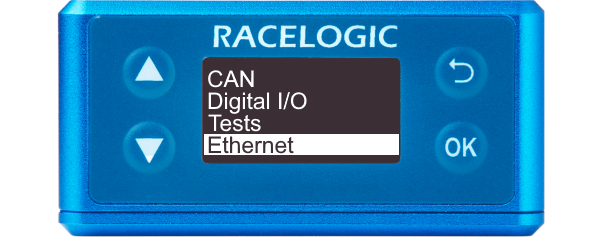
You can access the menu by pressing the OK button. Use the Up and Down arrows to navigate through the menu and press the OK button to enter a submenu or change a setting. When you edit a setting, the Up and Down buttons will let you scroll through the available options for that setting and the OK button will confirm your selection. Use the Back button to exit a setting.
You can use this menu to configure the Ethernet on your VBOX Speed Sensor unit.
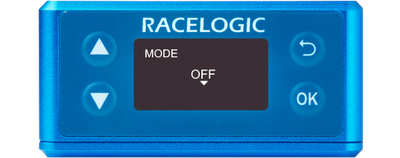
Ethernet is switched off.
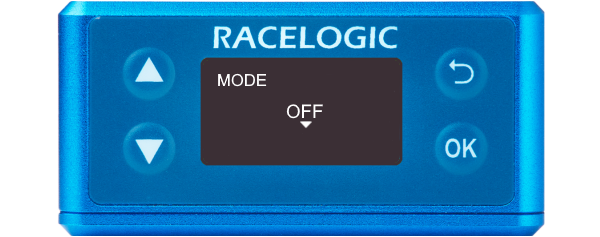
Ethernet is switched off.
This mode outputs the Racelogic proprietary Ethernet output.
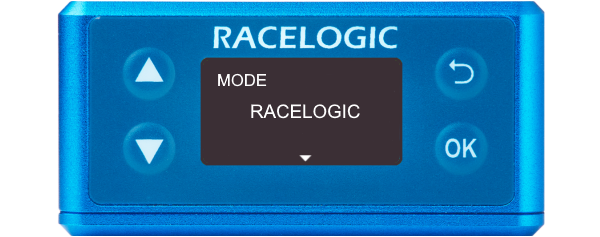
This mode outputs the Racelogic proprietary Ethernet output.
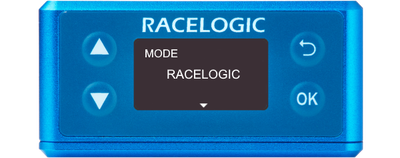
Note: When this mode is enabled, CAN will be set to 1 Mbit/s baud rate and all CAN IDs will be transmitted.
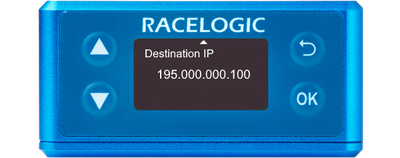
This is the IP address of your VBOX Speed Sensor. In this setting, you can change the IP address, which is stored in the unit's memory.
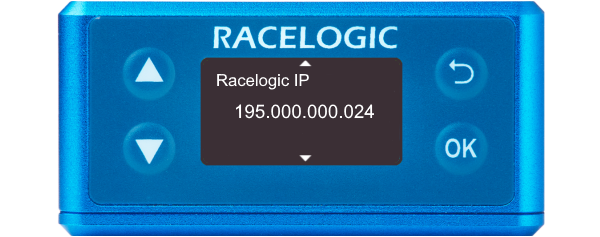
This is the IP address of your VBOX Speed Sensor. In this setting, you can change the IP address, which is stored in the unit's memory.
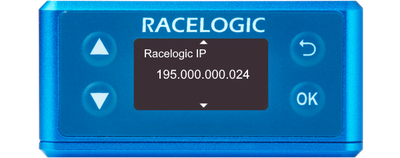
A static IP that you can change and that is stored in the unit's memory.
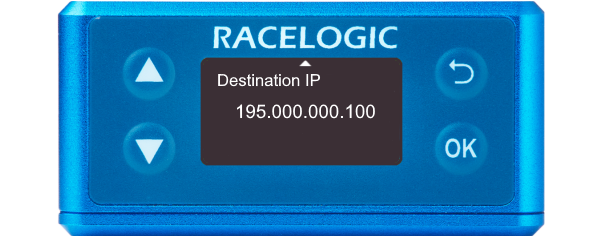
A static IP that you can change and that is stored in the unit's memory.